Sustainability in Business Events: How to Reduce Your Carbon Footprint Without Compromising Value

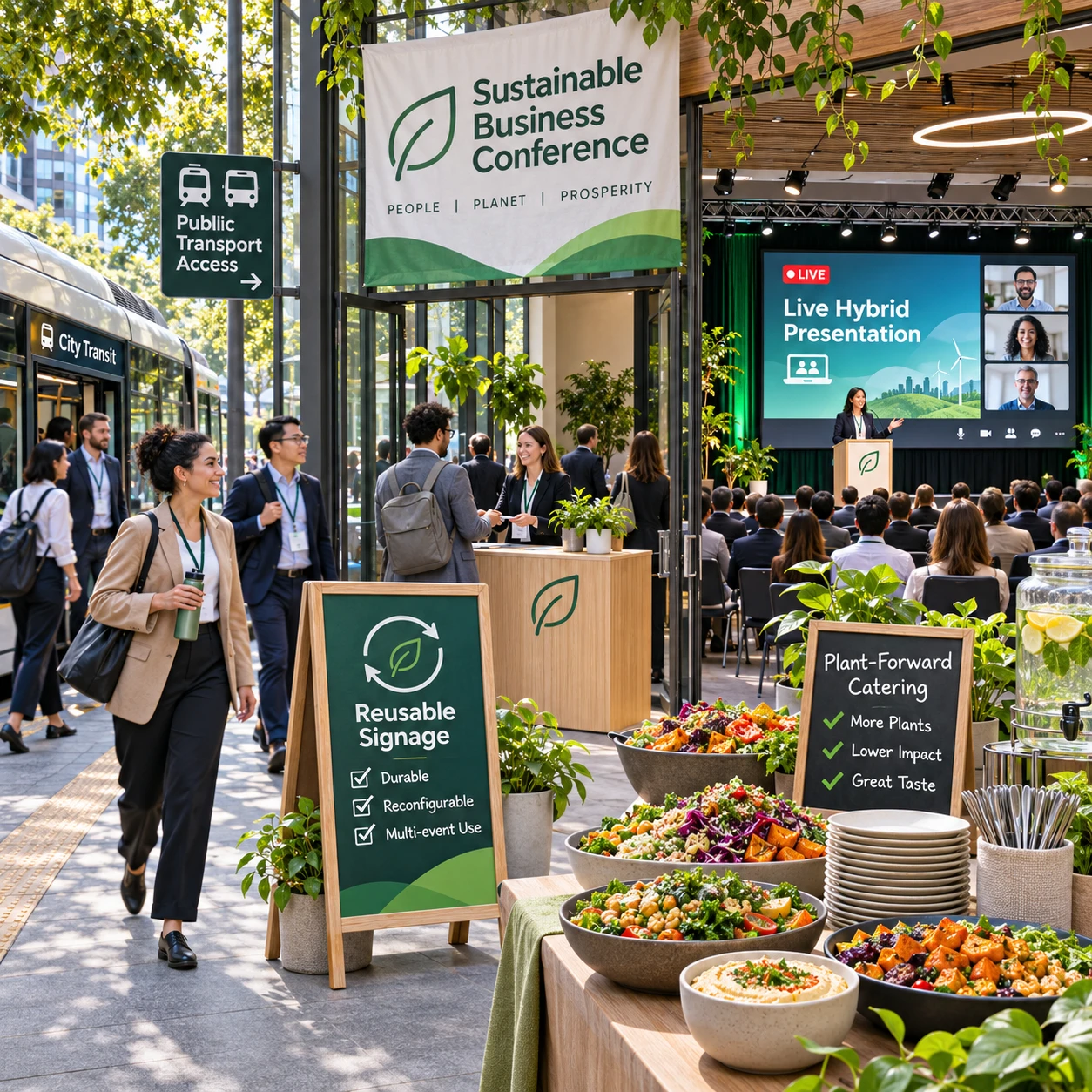
Sustainability in business events is most effective when it is built into the decisions that shape the attendee experience: where a conference takes place, how people get there, what they eat and what gets produced. These choices can reduce an event’s carbon footprint while protecting learning, networking, accessibility and sponsor outcomes.
There is no single low-carbon template for every industry conference. A regional customer forum, a large trade show and a technical training session have different audiences and needs. The practical goal is to identify the largest impacts for your event, then make changes that preserve the value people came for.
Why sustainability matters for business events
Sustainability matters because business events use energy and materials, generate waste and bring people together through travel. Planning for these impacts can also improve the event experience, support business objectives and show attendees and partners that environmental responsibility is taken seriously.
For organizers, sustainability is part of event quality. A venue near public transport may be easier to reach; a well-designed digital agenda can make updates faster; and clearly labeled food choices can help guests find options that suit them. These improvements can make an event more useful, not less appealing.
Attendees, sponsors and companies may also have environmental commitments that influence which events they support. Clear, credible actions can strengthen trust. Broad claims such as “zero impact” can do the opposite if they are not backed by a defined boundary, reliable data and transparent reporting.
Start with a simple test: Will this decision reduce impact without weakening access, learning, networking or business results? If the answer is no, look for another option rather than treating sustainability as a reason to remove something attendees value.
Understand where an event’s footprint comes from
An event carbon footprint is the greenhouse gas emissions associated with delivering and attending an event. It can include attendee travel, venue energy, catering, event materials, freight and waste, though the exact boundary depends on what the organizer measures.
Attendee travel is an important area to examine, especially when guests travel long distances. Venue electricity and heating or cooling, food production and delivery, and production materials can also contribute. Their relative importance varies by event size, location, duration, audience travel patterns and the quality of available data, so avoid assuming one universal ranking.
Map the event lifecycle before choosing interventions:
- Before the event: venue selection, supplier contracts, freight, fabrication and attendee travel planning.
- During the event: energy use, catering, water, printed materials, booth operations and waste sorting.
- After the event: equipment returns, material reuse, leftover food handling, travel data collection and reporting.
This map helps teams avoid focusing only on visible details, such as paper badges, while overlooking larger decisions made early in procurement. Record what is known, what is estimated and what is missing. That distinction makes later comparisons more honest.
Make lower-impact travel and format choices
To reduce travel-related impact, choose an accessible location, make lower-impact transport easy to use and consider whether remote participation can serve some attendees well. The right mix depends on the event’s purpose and audience.
When comparing cities and venues, consider proximity to major rail stations, public transit frequency, walkability and the number of attendees who would need a separate transfer. Share practical arrival information early, including public transport routes, walking times and any available shuttle options. If scheduling allows, avoid a program that forces guests to arrive the night before or leave before a viable train connection.
Hybrid and virtual events can reduce the need for some journeys and widen access for people who cannot attend in person. They also require technology, production and staff resources, and a hybrid setup may add operational complexity. A virtual event is not automatically lower impact in every case; the result depends on travel avoided, platform and production choices, audience behavior and the event boundary used for measurement.
Choose the format by matching it to the job:
- Use in-person sessions when hands-on work, relationship-building or live demonstrations are central.
- Offer a remote option when the content can be delivered effectively online or travel creates a significant access barrier.
- Consider regional hubs or repeat local sessions when one global gathering would require extensive long-distance travel.
For more information on measuring organizational emissions and setting boundaries, the Greenhouse Gas Protocol provides widely used accounting standards. Apply a consistent method across event formats so comparisons are meaningful.
Choose venues, catering, and suppliers with care
Choose venues, caterers and suppliers by asking for specific operating information, not just a general sustainability statement. Energy management, food sourcing, waste handling and delivery practices can all inform a practical comparison.
Ask venues whether they can share energy or building-management practices, how they handle recycling and food waste, and whether they can provide water refill stations. Check access by public transport alongside these environmental details; a highly efficient building may still require many guests to drive if it is poorly connected.
Catering offers a visible opportunity to improve resource use while maintaining a satisfying meal. Work with the caterer to provide appealing plant-forward dishes, use seasonal ingredients where practical, accommodate dietary needs and set quantities based on registration and attendance patterns. Confirm how surplus food is handled, and agree on a process for updating headcounts before service.
Supplier sustainability is easier to assess when questions are concrete. Ask production, exhibit and transport partners about reusable inventory, local sourcing, packaging, delivery consolidation and end-of-event collection. Compare the service and quality as well as environmental practices. Choosing a closer supplier may reduce freight, but only if it can meet the event’s technical and safety requirements.
Put expectations in writing. Procurement briefs and contracts can specify data needed after the event, waste procedures, material reuse plans and delivery windows. This gives suppliers time to plan and gives your team a basis for evaluating results.
Reduce materials and waste without reducing event quality
Reduce event materials by producing only what attendees need, choosing reusable items where practical and planning where every item will go after the event. The aim is to keep the experience polished while avoiding unnecessary production and disposal.
Use a digital agenda for schedules that may change, but keep essential information easy to find for guests with limited connectivity or accessibility needs. A small number of well-placed, reusable signs can be clearer than a large collection of temporary graphics. For badges, review whether every attendee needs one and whether components can be reused safely at future events.
For booths, stages and signage, ask designers to create modular elements that can be adapted for another conference. Right-size print runs using registration data, and avoid adding branded giveaways simply to fill a table. A useful, durable item may have more value than several disposable pieces, but only if attendees actually want it.
Waste plans should be agreed with the venue and suppliers before doors open. Label sorting stations with clear examples of accepted materials, position them where people naturally leave food and packaging, and assign someone to check that collected streams are handled as promised. A recycling bin alone does not guarantee recycling.
One common mistake is making a visible change, such as removing printed programs, without checking whether the replacement works for all attendees. Offer accessible alternatives and test the attendee journey. Another is ordering materials before registration closes; use attendance data and a defined cut-off date to avoid overproduction.
Measure results and involve stakeholders
Measure sustainability progress by setting a clear baseline, choosing a manageable set of indicators and collecting data from the people and organizations that control each part of delivery. Report the scope and limitations so readers understand what the results do and do not cover.
Before planning begins, define which emissions and operational impacts are included. For example, decide whether the event assessment covers attendee and staff travel, venue energy, catering, freight and materials. Track direct figures where available, such as energy use or waste weights, and label estimates clearly. Consistent methods matter more than false precision.
Choose targets that match your ability to influence the outcome. A team might aim to increase the share of attendees arriving by public transport, reduce unused print materials or obtain waste data from all major vendors. Set a deadline and an owner for each target. After the event, compare actual results with the baseline and explain what changed.
Engage stakeholders early:
- Attendees: ask about access needs and travel plans; provide useful transport and food information before registration closes.
- Sponsors: offer reusable booth options and clear guidelines for giveaways, shipping and signage.
- Speakers: share presentation formats and timing early, and consider remote participation where it serves the session.
- Suppliers: agree on responsibilities, data requests and post-event reporting in advance.
Publish a concise post-event summary with actions taken, measured outcomes and gaps. If data is incomplete, say so and identify how you will improve collection next time. Transparent reporting is more credible than a sweeping claim.
Build sustainability into the event plan
Build sustainability into the event plan by making key decisions in sequence: define the event’s purpose, identify its major impacts, select feasible interventions, assign owners and review measured results. This keeps environmental goals connected to attendee experience and business outcomes.
- Set the event boundary and a small number of measurable goals.
- Compare locations for transport access, venue operations and audience needs.
- Choose in-person, hybrid or virtual participation based on the value each format delivers.
- Confirm catering, waste and material plans with the venue and suppliers.
- Give attendees, sponsors and speakers clear ways to participate.
- Collect data, report limitations and carry lessons into the next event.
There is no need to solve every impact at once. Start with decisions your team can influence, preserve the elements that make the conference worthwhile, and use each event’s results to make the next one more effective.
Frequently asked questions
Which parts of a business event typically contribute most to its carbon footprint?
Attendee travel is often a major area to assess, alongside venue energy, catering, freight and materials. The largest sources vary with distance traveled, event format, location, duration and how the footprint is defined. Measure before prioritizing.
How can organizers make attendee travel more sustainable?
Select a location with strong public transport access, share route information early, schedule around practical connections and consider shuttles where they improve access. Hybrid participation or regional sessions may help some audiences avoid long journeys.
Are hybrid events always more sustainable?
No. Hybrid events can avoid some travel, but they also require production and technology resources. Their impact depends on which trips are avoided, how the event is delivered and what is included in the comparison.
How can event organizers measure sustainability progress?
Define the event boundary, record a baseline, collect consistent data on selected areas such as travel, energy, food and waste, then compare results over time. Separate measured figures from estimates and report gaps openly.