The Future of Hybrid Events: Blending Physical and Digital Experiences


Hybrid events are changing how companies deliver industry conferences. By combining an in-person conference with a carefully designed virtual experience, organizers can reach more professionals, support flexible participation, and create additional opportunities for networking and business development.
The strongest hybrid B2B events do not treat remote attendance as a backup option. They design a connected event journey in which physical and digital audiences receive useful content, meaningful interaction, and clear reasons to participate.
What Are Hybrid Events?
Hybrid events combine an in-person experience with a virtual experience so that on-site and remote attendees can participate in the same business program through connected content, technology, and interaction.
At an industry conference, the physical element may include a keynote stage, exhibition area, workshops, and face-to-face meetings. The digital element can include live streaming, virtual sessions, online questions, downloadable resources, discussion spaces, and remote networking. Some content is shared across both audiences, while other activities are designed specifically for one format.
This distinction matters. A camera pointed at a stage does not automatically create a successful virtual event. Remote participants need a clear interface, reliable sound, useful context, and opportunities to contribute. Likewise, in-person attendees should not feel that the venue experience has been reduced to support a broadcast.
A practical way to plan the model is to divide the event into three layers:
- Shared content: Keynotes, panels, product demonstrations, and selected workshops available to both audiences.
- Format-specific experiences: In-person roundtables or virtual breakout rooms built around the strengths of each channel.
- Connection points: Moderated Q&A, audience polling, speaker interaction, matchmaking, and post-event communities that link both groups.
Why Hybrid Events Matter for B2B Conferences
Hybrid events matter for B2B conferences because they expand participation while giving professionals more flexible, accessible ways to learn, connect, and evaluate business opportunities.
Geography is the clearest advantage. A specialist conference in London, Chicago, or Singapore can reach decision-makers who cannot justify travel, obtain a visa, or leave a busy customer schedule. Remote access also helps companies involve more employees without paying for every person to attend on site.
Flexibility supports different professional needs. An executive may attend the opening keynote in person, while a regional sales team watches selected sessions online. A technical buyer can replay a product demonstration after the live program. On-demand access also gives international audiences a practical way to engage across time zones.
Event accessibility is another strategic benefit. Captions, transcripts, screen-compatible materials, adjustable audio, and remote participation can support people with disabilities and attendees who face travel or health limitations. Organizers should review accessibility requirements early rather than adding them during production.
Hybrid formats can also improve the commercial value of an event. More participants create a larger audience for thought leadership and sponsorship. Digital registration data may reveal which sessions attract specific industries or job functions. The trade-off is operational complexity: a hybrid event typically requires more planning, production support, moderation, and content management than a single-format conference.
Designing a Seamless Hybrid Event Experience
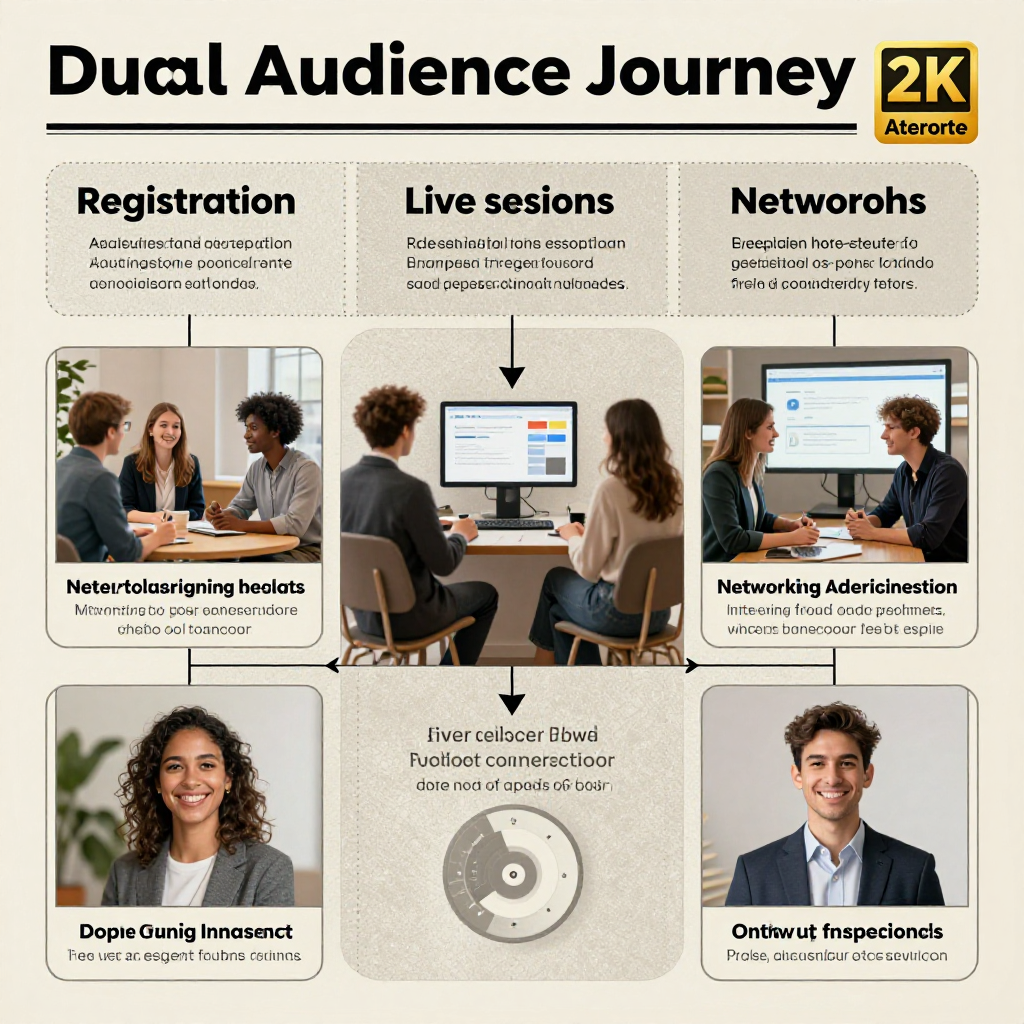
To design a seamless hybrid event experience, plan one strategic audience journey with separate pathways for in-person and remote participation. Start with audience needs, then assign content, interactions, and communications to the format that serves each goal best.
Align the agenda and audience journeys
Build the program around clear outcomes such as learning, peer exchange, supplier discovery, or relationship development. Avoid scheduling every session as a simple mirror of the venue agenda. A remote audience may prefer shorter digital segments, structured breaks, and more frequent opportunities to ask questions.
Publish practical information before registration closes: time-zone details, session access rules, replay availability, accessibility features, and networking options. During the event, use consistent naming, speaker information, branding, and navigation across the venue screens and digital platform.
Make content work in both formats
Speakers need a briefing that covers camera position, microphones, pacing, slides, remote questions, and interaction. A panel designed for an auditorium may feel slow online, so moderators should summarize key points, invite digital questions, and explain what is happening in the room.
Recordings should be edited or chaptered where appropriate. A 45-minute session may be valuable live but difficult to revisit. Clear titles, transcripts, timestamps, and related resources turn conference content into a longer-term business asset.
Design registration as a strategic decision
Registration should ask about attendance preference, role, industry, interests, accessibility needs, and networking objectives. This information can personalize reminders, recommend sessions, and improve lead qualification without forcing attendees through an unnecessarily long form.
Technology That Powers Hybrid Events
Hybrid event technology connects content, participation, networking, and measurement across physical and virtual settings. The right setup depends on the event’s goals, audience size, production standard, and tolerance for technical risk.
- Event platforms: Provide registration, schedules, profiles, session access, messaging, resources, and post-event content.
- Live streaming: Delivers keynotes, panels, and demonstrations to remote attendees with professional audio, stable video, captions, and backup connectivity.
- Interactive tools: Support live polling, quizzes, surveys, moderated Q&A, reactions, and questions submitted before a session.
- Virtual networking: Includes one-to-one meeting booking, hosted video rooms, topic communities, and structured introductions.
- Event analytics: Tracks registrations, attendance, session behavior, engagement, content downloads, meetings, and feedback.
Integration matters more than a long feature list. Registration data, attendance records, consent settings, meeting activity, and follow-up workflows should connect where possible. Organizers also need a human operating layer: a technical producer, remote audience moderator, speaker support, and someone responsible for escalation.
Privacy and security deserve attention in B2B environments. Explain how attendee profiles and meeting data will be used, limit access to authorized staff, and follow applicable data protection requirements. Technology can increase reach, but it cannot compensate for poor audio, confusing navigation, or an agenda with little relevance.
Keeping In-Person and Remote Audiences Engaged
To keep both audiences engaged, give each group a meaningful role in the program and create deliberate interaction between the venue and the virtual environment. Engagement should be planned as a sequence rather than measured only by clicks.
Moderated Q&A is one of the simplest shared formats. Collect questions from the room and online, group duplicates, and ask speakers to address both sources. A moderator should acknowledge remote participants by name or location when appropriate and explain why some questions may be answered later.
Polling can reveal differences between audiences. For example, an industry panel might ask attendees to identify their biggest supply-chain risk, then compare results from the venue and the virtual platform. The speaker can respond to the contrast, turning a digital tool into useful market insight.
Networking needs more structure than an open chat box. Try:
- Pre-event matchmaking based on role, sector, and stated objectives.
- Hosted small-group discussions with a facilitator and a specific question.
- Scheduled online meetings alongside in-person buyer-supplier appointments.
- Hybrid roundtables where a room moderator and remote facilitator share responsibility.
- Post-event communities for follow-up questions, resources, and introductions.
Content should also be tailored. Remote attendees may value downloadable frameworks, searchable replays, and shorter expert interviews. In-person attendees may prioritize workshops, demonstrations, and informal conversations. Equal value does not require identical experiences.
Common Challenges and How to Address Them
Hybrid events commonly struggle with technical failures, unequal audience experiences, scheduling pressure, production demands, and unclear contingency plans. Most problems become easier to manage when organizers identify dependencies before the event.
Technical reliability
Unstable internet, weak microphones, inadequate lighting, or overloaded platforms can damage trust quickly. Test every room, speaker setup, stream, caption feed, and access route under realistic conditions. Use backup internet, spare microphones, recorded versions of critical presentations, and a clearly assigned incident lead.
Unequal experiences
Remote attendees often receive less attention because speakers naturally respond to the room. Use a dedicated moderator, visible question queues, and regular digital participation moments. On-site attendees should also receive clear guidance rather than being expected to navigate several disconnected tools.
Scheduling across time zones
A single live schedule rarely suits a global B2B audience. Repeat high-value sessions, provide recordings quickly, and publish times with time-zone labels. This increases access, although repeated delivery adds speaker and production costs.
Production complexity and contingency planning
Hybrid events combine conference logistics with broadcast operations. Create a run-of-show that includes speaker cues, platform links, moderation responsibilities, captions, transitions, and escalation contacts. Define what happens if a speaker loses connectivity or the main stream fails. A short recorded segment can protect the agenda while the team restores service.
Measuring Hybrid Event Success
Measure hybrid event success across reach, engagement, networking, experience quality, and business outcomes rather than attendance alone. The most useful framework connects each metric to a decision the event team needs to make.
- Reach: Registrations by location, company, role, industry, and attendance format.
- Participation: Live attendance, replay views, session completion, watch time, downloads, and workshop activity.
- Engagement: Poll responses, questions, chat contributions, reactions, survey completion, and community activity.
- Networking: Profile views, meeting requests, accepted meetings, conversations, introductions, and exhibitor interactions.
- Experience quality: Satisfaction scores, accessibility feedback, technical incident rates, and format-specific comments.
- Business value: Qualified leads, pipeline influenced, meetings progressing, partnerships initiated, and renewal or attendance intent.
Compare results by audience type. A high registration count with low remote attendance may indicate weak reminders or access friction. Strong session viewing with few meetings could mean the content worked but networking design did not. Post-event surveys should ask what participants did, what they found valuable, and what prevented deeper participation.
Use a simple improvement cycle: measure, diagnose, adjust, test. Review analytics within a week while memories are fresh, then compare findings with sales, speakers, sponsors, and attendees. This turns event analytics into planning intelligence for the next conference.
Frequently Asked Questions About Hybrid Events
What is a hybrid event?
A hybrid event combines an in-person gathering with a virtual participation experience. Both audiences access relevant content and interaction, although some activities may be tailored to each format.
What are the main benefits of hybrid conferences?
Hybrid conferences expand geographic reach, support flexible participation, improve accessibility, extend content lifespan, and create additional data for audience and business analysis. They also require more production planning and technology investment.
How can remote attendees participate in networking?
Remote attendees can use matchmaking, scheduled video meetings, facilitated discussion rooms, moderated introductions, chat communities, and post-event follow-up groups. Clear prompts and hosts work better than an unstructured networking area.
What technology is needed for a successful hybrid event?
Most programs need an event platform, reliable live streaming, professional audio and video, audience polling, moderated Q&A, virtual networking, accessibility features, registration integration, and event analytics. The exact setup should follow the event’s objectives.
How should organizers measure hybrid event performance?
Track registrations, attendance, viewing behavior, questions, polls, networking activity, feedback, technical issues, qualified leads, meetings, and pipeline influence. Segment results by in-person and remote audiences to identify format-specific improvements.
Hybrid events give B2B organizers a broader canvas, but their value comes from design rather than the label. When content, moderation, accessibility, technology, and measurement work together, an industry conference can serve people in the room and professionals joining from anywhere without making either group feel like an afterthought.